Lucy Hackett is a composer, musician, and music producer creating music for film, television. With a degree in music and a master’s in composition, she is also a harmony expert and tutor here at ThinkSpace Education, co-creating one of our latests courses, available now at an introductory offer: Practical Harmony 2
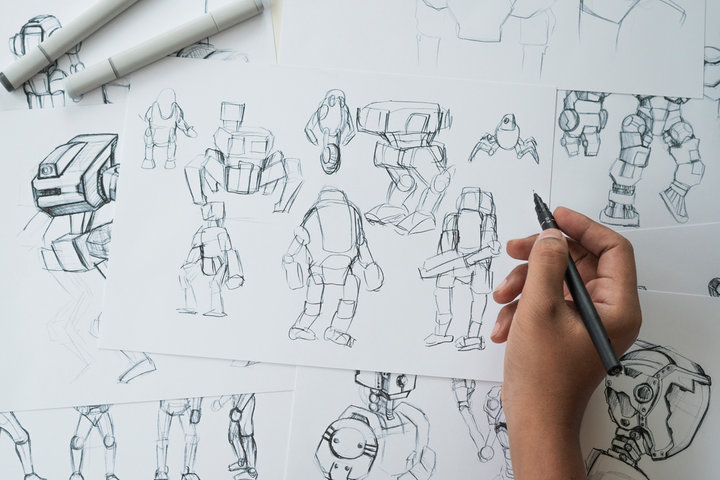
Animated visuals have always fascinated me because, unlike live-action visuals, where ‘things’ already exist, everything in animation starts from nothing. Animation is imagination realised, without boundaries, and in this sense, the art form feels a lot like music. Both are built from silence, and when combined, they have limitless potential.
As Rebecca Coyle observes in her book Drawn to Sound: Animation Film Music and Sonicity (2010):
“Sound is a central component of animation that initiates, assists and extends its critical expressive tools… sound enables animation film to leap out of the screen and engage the viewer’s imagination.”
So whether an animation has a narrative or recognisable characters, or whether it is a completely abstract performance of colours and textures, sound and music can help to bring an extra dimension to the visual and emotional experience. In non-dialogue animation especially, music becomes a kind of language. It carries the rhythm of movement, the tone of personality, and the subtext of emotion. In this way, music becomes character.
Character Through Sound: How Music Shapes Emotion and Personality
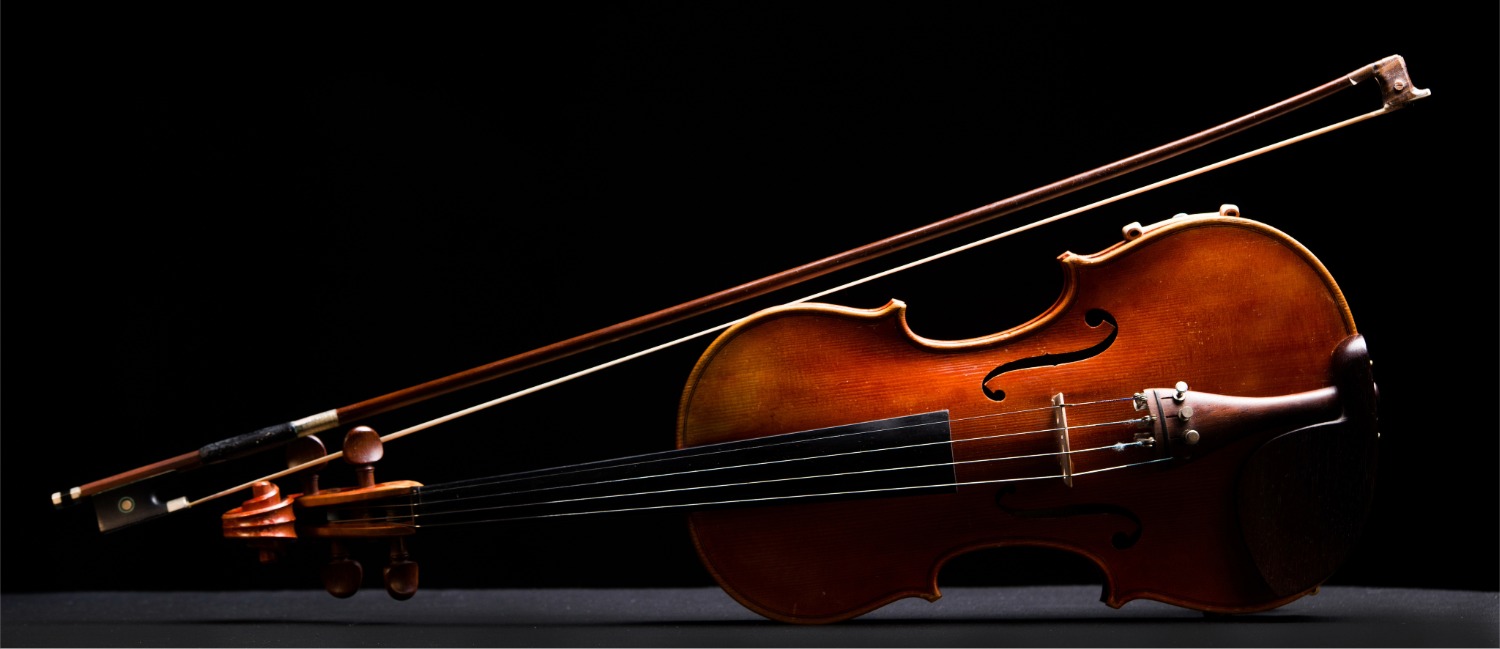
In many animated films, instruments stand in for voices. But often, these choices aren’t arbitrary, they’re psychological shorthand. Classic animation composers like Carl Stalling and Scott Bradley built entire sonic vocabularies for cartoons using this idea. A banjo might signal rustic charm, xylophone for mischief, trombone for comedic disaster. Their work in early Warner Bros. and MGM shorts created a musical language that remains instantly recognisable today.
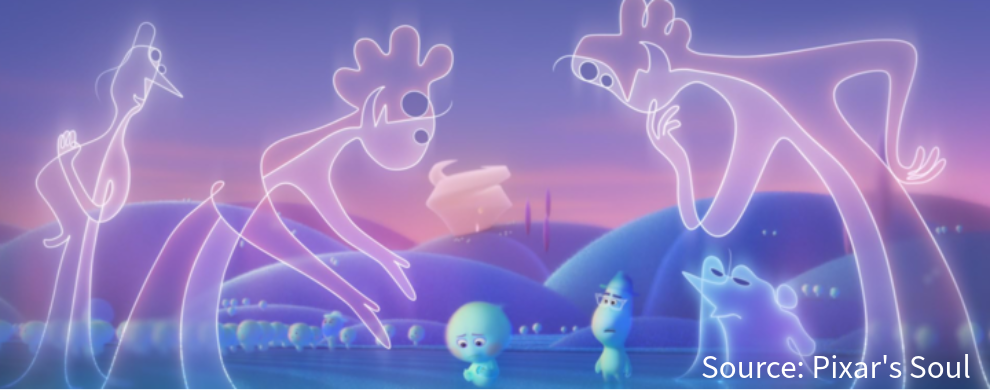
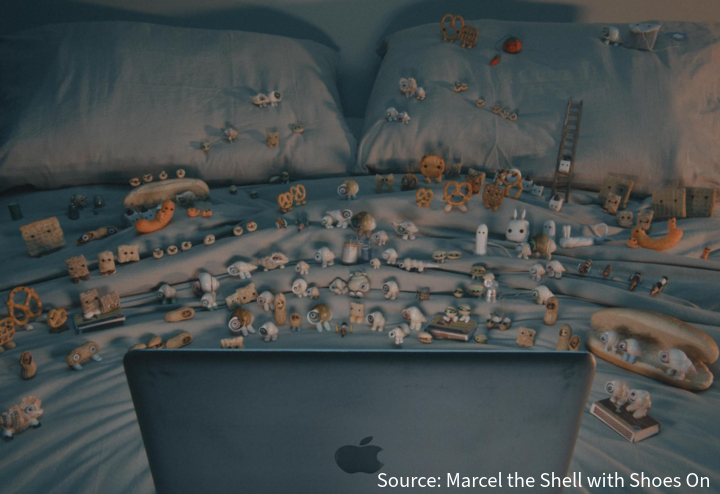
More contemporary works continue to explore this relationship between musical and visual context. Jon Batiste, Trent Reznor and Atticus Ross’ score for Pixar’s Soul (2020) shifts from a warm, jazz-infused score in the “real world” to an abstract, electronic one in “The Great Beyond,” perfectly mirroring its visual transformation. Likewise, Disasterpeace’s score for Marcel the Shell with Shoes On (2021) blends acoustic and synthetic textures to reflect the mixture of reality and imagination in its tone. These sound worlds don’t just accompany the visuals, they help define them.
The Rhythm of Storytelling: Silence, Timing, and the Comedic Beat
Animated storytelling is deeply rhythmic and timing is everything. Consider Pixar’s animated short Piper (2016); after a flurry of musical energy as a wave crashes, there’s a sudden cut to silence before the comedic reveal of a trembling bird. The quiet isn’t absence, it is punctuation, a perfectly timed pause that makes the moment land.
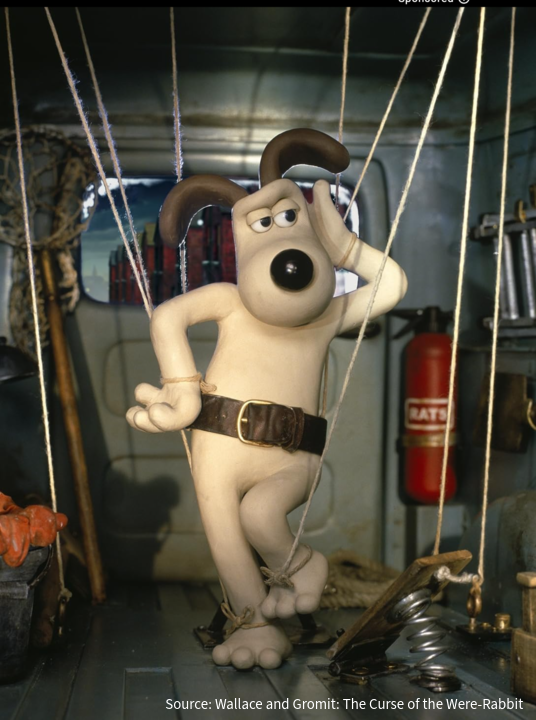
Comedy in animation adds another layer of complexity. Writing “funny” music isn’t simply about being light-hearted - it’s about timing, reference, and restraint. Carl Stalling famously quoted snippets of popular songs and classical works to humorous effect, creating a kind of musical meta-commentary. In a more recent example from Wallace and Gromit: The Curse of the Were-Rabbit (2005), the score cheekily references David Rose’s The Stripper (1962), in a moment of visual comedy which is a nod both to the song’s history and to the infamous comedy sketch from British duo Morecambe and Wise. For those in the know, these additional cultural references add another facet of humour to an already amusing animated sequence.
Sound that Feels: Texture, Space, and Movement
Every animated world has a texture, whether drawn, modelled, or rendered in 3D. Music can mirror that texture, smooth or scratchy, soft or metallic, playful or eerie. Sound design and music can overlap here; the squeak of a floorboard might blend into a violin glissando; a rhythmic edit might sync with percussion. This interplay, along with the inclusion of sonic elements like reverb or distortion, can help to create a sense of space, large and echoing, or intimate and close. The acoustic world of the music starts to feel like the physical world of the animation
Music can also help to define the movement of animation. Tempo can match motion, or deliberately oppose it. A slow waltz beneath frantic action can create irony; a rapid cue beneath stillness can suggest internal emotion. In this way, music doesn’t just support the image, it helps to interpret it.
So with all of this in mind, next time you are watching an animation, why not have a think about some of these ideas. Perhaps these prompts could help you to discover a new level of appreciation for music and animation:
- Aesthetic Impact: How do the visuals shape the choice of sounds or instruments?
- Texture & Form: Is it abstract or clear? How does it feel, and how does that affect timbre and layering?
- Movement: Fast, slow, smooth, jagged, repetitive, evolving? How does it shape tempo and structure?
- Space/World: Large or small, realistic or abstract? How does it affect acoustics and production?
- Character Traits: Cute, appealing, unlikable? How can music reinforce or subvert personality?
- Storytelling: Which musical devices support the narrative or emotional arc?
ABOUT THE AUTHOR